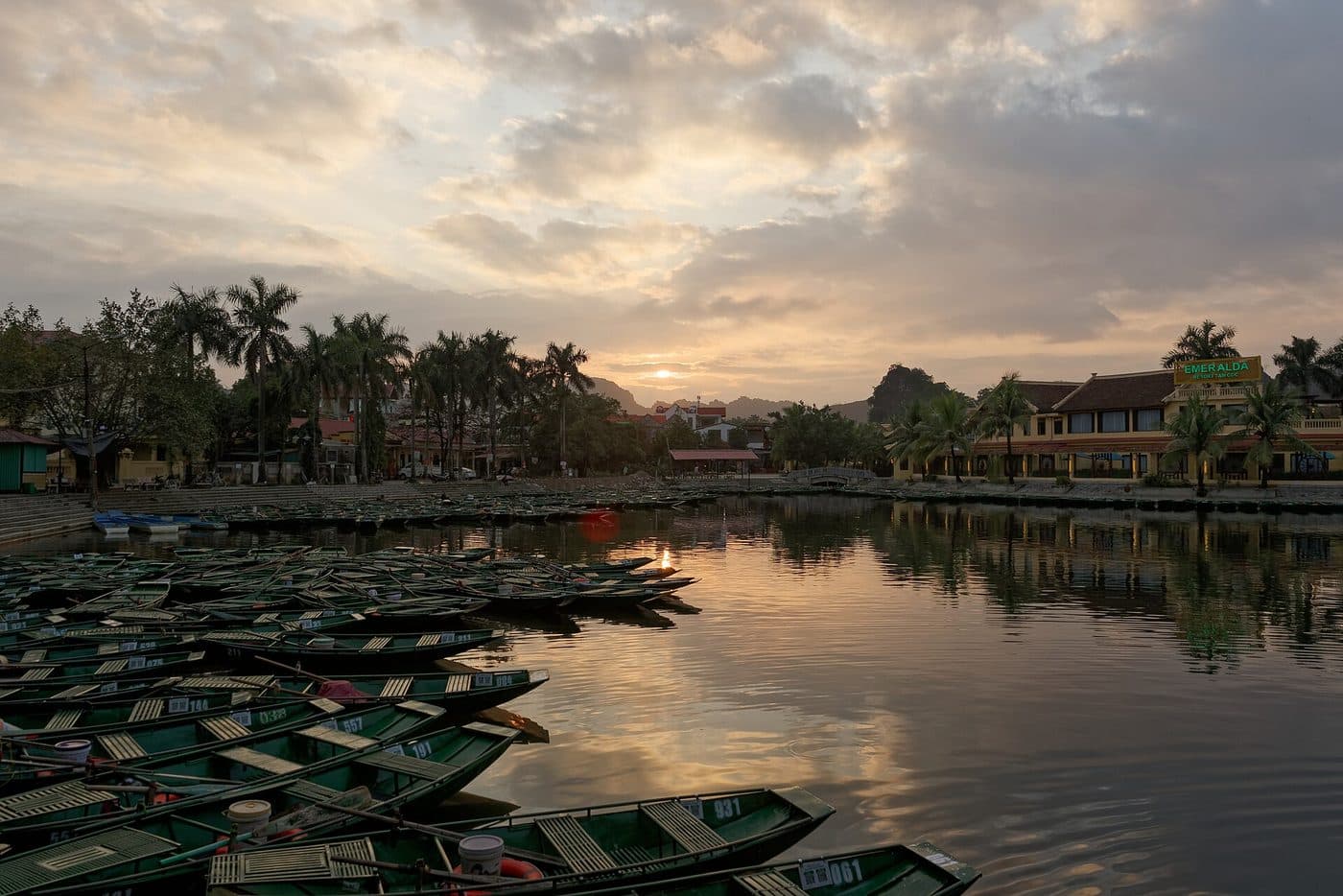
Wintering in Vietnam in 2026: the long-stay guide
Wintering in Vietnam means swapping a grey northern winter for your own beach and a laptop for three to six months. The dong is stable, the visa is easy, and it is still +26 °C in Da Nang at 8 a.m. in January. Real 2026 costs, eight cities compared, a visa strategy for any passport, and the honest downsides of each spot. No hype.

Why winter in Vietnam
For nomads and retirees fleeing a cold northern winter, Vietnam has quietly become one of Asia's best-value escapes. The pitch is simple: warm, cheap, fast internet, and an easy visa. Places that used to own this niche — Bali, Phuket — have grown expensive, with rents and deposits climbing hard. Vietnam still lets you live well on around $1,500 a month.
This is not marketing. In the InterNations Expat Insider 2025 survey Vietnam again ranked at or near the top of the world for the Personal Finance Index, with the vast majority of expats happy with the cost of living. That figure comes from more than 10,000 expats, with 46 countries ranked — not a tourism-board brochure.
The baht is already 1:3 to the rouble. Several people I know have switched to less-hyped Vietnamtranslated from a Russian long-stayer's review, irecommend.ru, 2025
If this is your first long trip, the rest of this guide is built for exactly that: three to six months, no longer. Beyond half a year the visa maths and the tax questions change — that is the territory of the relocation guide, while the remote-work and tax side lives in the digital-nomad guide.
Best cities for a winter stay: map and comparison
Long-stay travellers usually choose between eight spots. Da Nang, Nha Trang and Ho Chi Minh City are the core three. Phu Quoc, Hoi An and Mui Ne are niche picks. Vung Tau and Quy Nhon are for those who want quiet.
- Da Nang (Đà Nẵng): Top winter-stay hub — Studios 7.6–16.5M VND (~$300–650)/mo — Best coworking in the country
- Nha Trang (Nha Trang): Beach-city, dry from December — Studios 6.4–15M VND (~$250–600)/mo — Large, long-established expat community
- Ho Chi Minh City (Hồ Chí Minh): Megacity, business, nightlife — 1BR 14–30M VND (~$550–1,200)/mo — Thao Dien — the expat district
- Phu Quoc (Phú Quốc): Tropical island — Studios 10–18M VND (~$400–700)/mo — Quiet, about 20% pricier
- Hoi An (Hội An): Lantern-lit old town — Houses 6.4–12.7M VND (~$250–500)/mo — 30 km from Da Nang
- Mui Ne (Mũi Né): Kitesurfing capital — Studios from 5M VND (~$200)/mo — The cheapest option
- Vung Tau (Vũng Tàu): Quiet beach town — 7.6–12.7M VND (~$300–500)/mo — 2 hours from Ho Chi Minh City
- Quy Nhon (Quy Nhơn): Up-and-coming spot — 6.4–10M VND (~$250–400)/mo — Long, clean beach
City comparison
| City | Climate | Budget/mo | Best for | Downside |
|---|---|---|---|---|
| Da Nang | +22–28 °C, damp in December | $1,500–2,200 | Remote workers, families | Rain lingers into January |
| Nha Trang | +24–28 °C, dry from December | $1,200–1,800 | Cheap beach base | Touristy, noisy strip |
| Ho Chi Minh City | +25–32 °C, dry | $2,000–3,000 | Business, networking | Traffic, smog |
| Phu Quoc | +28–31 °C, dry | $1,600–2,400 | Introverts, couples | Pricier, provincial |
| Hoi An | +22–28 °C | $1,300–1,800 | Aesthetes, quiet life | Floods in November |
| Mui Ne | +25–30 °C, windy | $1,000–1,500 | Kitesurfers, tight budgets | Thin infrastructure |
| Vung Tau | +25–32 °C | $1,400–1,900 | Families with kids | Little English-language service |
| Quy Nhon | +24–28 °C | $1,200–1,700 | Off-the-beaten-path types | Limited English |
Da Nang

The favourite of the last few years. Clean, modern, no pushy touts. Mỹ Khê beach runs 5 km of white sand. Sea-view studios go for around $455–650 (source: viethomerental.com, 2025); inland, from $200.
The draw: a strong coworking scene (Enouvo Space, cirCO, DNC Business Incubator), fast internet, and Hoi An and Bà Nà Hills nearby. The weak spot is December and part of January — rain and 80%+ humidity. By February and March the weather is close to perfect. For a full breakdown, see the Da Nang guide and the districts comparison.
Nha Trang

A proper beach city with a long promenade and a large, established foreign community — signs in several languages, bakeries, clinics, schools. Studios run $250–400, sea-view $400–600. The rainy season ends earlier here, by December.
Honest downsides: after a couple of months the tourist-strip vibe wears thin, the seafront is noisy, xe om drivers are persistent, and by 2026 prices have crept up towards Da Nang's. There is a dedicated Nha Trang guide on the blog.
Ho Chi Minh City

A megacity of some 10 million. You come here for business networking, an IT scene and 24/7 nightlife. Winter is dry and warm, around +28–32 °C. The prime expat area is Thảo Điền in the former District 2, with 1BR rents at $700–1,200. Outside the centre, $330–500.
Downsides: smog, permanent traffic, and costs 20–30% above Da Nang. For neighbourhood detail, see the Ho Chi Minh City districts guide.
Phu Quoc

A tropical island with its own microclimate. December–February: +30…+31 °C air, +25…+27 °C water. Ideal if you want quiet and sea without any city buzz. Downside: groceries are shipped in from the mainland, so prices run about 20% higher, and the foreign community is small.
For a short trip, the Phu Quoc guide covers the basics. For a 3–6 month stay, people find housing through island Facebook groups and Airbnb long-stay discounts.
Hoi An

30 km from Da Nang. Some winterers live in Hoi An and commute to Da Nang's coworking spaces (40 minutes by motorbike). Narrow lanes, lanterns, craft workshops. Houses and studios run $250–500/mo.
Main risk: in October–November the centre can flood — pick a place in the An Bàng area nearer the beach. There is a full Hoi An guide on the blog.
Mui Ne

Southeast Asia's kitesurfing capital. November–March brings steady 5–7 force wind. Prices are 30–40% below Nha Trang, studios from $200. Downsides: the beach isn't great for swimming (waves and undertow), infrastructure is thin, and there are few cafes and shops.
This is for people who kite and want to live compactly. City rhythm simply doesn't exist here. For the essentials, see the Mui Ne guide on the blog.
Vung Tau
A satellite resort of Ho Chi Minh City, two hours away by ferry or bus. A quiet beach town without mass tourism; rents $300–500. Good for families with kids: calm, clean, and doctors close — the big city is two hours off.
Downside: almost no English-language service, so you'll need some Vietnamese or a translation app for a longer stay.
Quy Nhon
Growing since 2023. 16 km of white sand, few tourists, prices still "old" — studios $250–400. Downsides: a thin choice of cafes with English menus, no foreign infrastructure, and limited long-term housing stock.
A good pick if you want to see the "next Da Nang" before it grows up.
Which city for whom — the short version
- First winter, no contacts in the country → Da Nang. The all-rounder, least stress
- Budget under $1,500/mo, want a proper beach town → Nha Trang
- Budget under $1,200/mo, can handle spartan → Mui Ne or Quy Nhon
- Business, networking, IT scene → Ho Chi Minh City (Thảo Điền)
- Family with small kids → Vung Tau or Da Nang
- Creative work, quiet life → Hoi An
- Couple, no work, just the beach → Phu Quoc
- Kitesurfing or surfing → Mui Ne (kite) or Da Nang (surf)
Visa strategy for 3–6 months
Vietnam's entry rules are among the friendliest in Asia — but the exact window depends on your passport. Check your own nationality before booking; the rules below are the common ones for 2025–2026.
Know your visa-free window
- Visa-free 45 days: most Western European nationals (UK, Germany, France, Italy, Spain and others), plus a handful of Asian countries — extended through 2028.
- Visa-free 15–30 days: varies; several ASEAN passports get 30 days, some get less.
- No visa-free (US, Canada, Australia, most others): you go straight to the e-visa.
The 90-day e-visa — the backbone of any long stay
Regardless of nationality, anyone can apply online for an e-visa valid up to 90 days: US$25 for single entry, US$50 for multiple entry. It is issued in roughly 3–5 working days. This is the tool that turns a two-week visa-free window into a multi-month stay. Full walkthrough in the Vietnam visa guide.
The "3-month" plan — simple
- Enter on a 90-day multiple-entry e-visa (~$50; apply before you fly).
- Live your first stretch.
- Near the end, fly to Cambodia, Laos or Thailand for a couple of days (from ~$80 one way).
- Re-enter on a fresh 90-day e-visa. That comfortably covers 4+ months.
The "6-month" plan — a double border run
- Enter on a 90-day e-visa.
- Around day 85, fly to Bangkok or Phnom Penh.
- Return 2–3 days later on a new e-visa.
- That gets you to roughly 180 days without trouble.
The PAI QR code — now mandatory at the main airports
In 2026 Vietnam rolled out a mandatory Pre-Arrival Information declaration. According to Vietnam Airlines, it applies at Noi Bai (Hanoi), Da Nang, Cam Ranh (Nha Trang) and Tan Son Nhat (Ho Chi Minh City). Fill it in at prearrival.immigration.gov.vn up to three days before you land; it is free and takes 5–10 minutes. At the border you show the QR and the officer scans it. It does not replace your visa — you still need the e-visa separately.
Typical scenarios
Scenario 1: "Just a 6–8 week break." If your passport gets 45 days visa-free, you may not need any run at all — just don't overstay (fines apply per day, and it complicates your next entry).
Scenario 2: "3 months, one trip out." 90-day e-visa + one border run in the middle.
Scenario 3: "4–5 months, two runs." Two e-visas back to back with one or two border runs. The default for remote workers who don't want to fly home.
Scenario 4: "6 months with a TRC." In theory, marriage, a business or a work permit can get you a Temporary Residence Card. It's document-heavy and not realistic for most nomads.
What to have at the border
- Passport with 6+ months validity
- 2 blank pages
- Your printed or saved e-visa
- The PAI QR code on your phone
- An onward or return ticket (they may ask)
- A booking for the first 3–7 nights (rarely checked, but it happens)
Budget $1,000–2,500/mo: the real breakdown
The big question is always "how much do I bring?" Below are three scenarios based on real 2026 spending, in VND with a rough USD conversion at ~26,000 VND = $1 (the mid-July 2026 rate).
Lean — ~$1,000/mo (Mui Ne, Quy Nhon, Vung Tau)
| Item | VND | ~USD |
|---|---|---|
| Housing (inland studio) | 7,800,000 | ~$300 |
| Food (cooking + street) | 6,500,000 | ~$250 |
| Transport (bike + fuel) | 2,340,000 | ~$90 |
| SIM + internet | 650,000 | ~$25 |
| Fun, sport | 3,120,000 | ~$120 |
| Insurance | 1,430,000 | ~$55 |
| Misc. | 2,860,000 | ~$110 |
| Total | 24,700,000 | ~$950 |
With a buffer for a border run, count on about $1,000.
Comfortable — ~$1,800/mo (Da Nang, Nha Trang)
| Item | VND | ~USD |
|---|---|---|
| Housing (sea-view studio) | 14,300,000 | ~$550 |
| Food (cafes + restaurants) | 11,700,000 | ~$450 |
| Transport (bike + Grab) | 3,900,000 | ~$150 |
| SIM + internet | 780,000 | ~$30 |
| Sport, massage, leisure | 6,500,000 | ~$250 |
| Coworking | 2,080,000 | ~$80 |
| Insurance | 1,560,000 | ~$60 |
| Misc. | 5,200,000 | ~$200 |
| Total | 46,020,000 | ~$1,770 |
Premium — $2,500+/mo (Ho Chi Minh City Thao Dien, Da Nang premium)
| Item | VND | ~USD |
|---|---|---|
| 2BR with pool and gym | 26,000,000 | ~$1,000 |
| Restaurants | 18,200,000 | ~$700 |
| Transport (Grab Car + taxi) | 6,500,000 | ~$250 |
| Coworking premium | 3,900,000 | ~$150 |
| Sport, spa, concerts | 10,400,000 | ~$400 |
| Insurance premium | 2,600,000 | ~$100 |
| Misc. | 7,800,000 | ~$300 |
| Total | 75,400,000 | ~$2,900 |
Conversion used here: 1 USD ≈ 26,000 VND (it hovered around 26,250 in mid-July 2026, so check the live rate before you go). Detailed city-by-city costs are in the Vietnam trip budget and Vietnam prices guides.
Fast Track — no queue at the border
5–10 minutes instead of an hour in the immigration queue
from$11per passenger
Long-term rentals: where to look and what to check

Housing is the biggest line item. The standard play: arrive, spend 1–2 weeks in an Airbnb or guesthouse, then hunt for a long-term place on the ground.
Where to find housing
- Facebook groups — the best channel. "Da Nang Apartments for Rent," "Nha Trang Long-term Rent," "Cho Thuê Phòng + [city]."
- Batdongsan.com.vn — Vietnam's biggest property portal. There is an English version, though not for every listing.
- Local agents / brokers — they take 0.5–1 month's rent as commission but know off-market flats. Many operate through the Facebook groups above.
- Airbnb long-stay — a 10–15% discount for bookings of 28+ nights. Good if you'd rather not deal with local landlords directly.
- On foot — walk the area you like and look for "cho thuê" (for rent) signs; plenty of small listings never make it online.
Long-stay discount
For 3-month rentals, many landlords, in our experience, drop the price 10–15%. For 6 months, up to 20%. You pay either the whole term up front or monthly with a 1–2 month deposit.
What to check at the viewing
- Noise — visit on a Friday evening and a Sunday morning. Construction next door, karaoke and roosters are all normal here.
- Internet — ask them to run a Speedtest. Under 30 Mbps is a no for remote work.
- Electricity — the bill can be 2–3x the official tariff. Confirm the rate per kWh (giá điện) and check it against the EVN tariff.
- Water — same story. The norm is 5,000–10,000 VND per cubic metre.
- Air-con — test every room. A compressor replacement is $150–300.
- Landlord ID — always take a photo of it.
- Contract — in English, with dates, price and break clauses.
Deposit and settlements
Standard: deposit = 1–2 months' rent, returned 1–2 weeks after you leave. If a landlord drags their feet, you can turn to the ward police (công an phường).
The Vietnam rental guide covers the paperwork side in full.
Healthcare and insurance
The topic winterers put off "until they arrive" — then pay $600–800 for a day in a hospital bed. Don't be that person.
Wintering past sixty-five is a different calculation: insurers apply age loadings and several stop selling to new applicants entirely. What that does to the budget, and how pensions travel, is covered in the guide to retiring in Vietnam.
Levels of care
| Level | Visit | Bed/day | English |
|---|---|---|---|
| Public hospital | $8–20 | $20–80 | Basic, not everywhere |
| Local private | $15–40 | $80–200 | Usually fine |
| International (Vinmec, FV) | $60–160 | $240–800 | Fluent |
Where to get treated
- Da Nang: Vinmec Da Nang, Family Medical Practice
- Ho Chi Minh City: FV Hospital, Family Medical Practice (District 1, District 7), Vinmec
- Nha Trang: Vinmec Nha Trang (Tran Phu), plus English-speaking doctors found via local Facebook groups
- Phu Quoc: Vinmec Phu Quoc — the main international clinic on the island
Dentistry — its own story
Many winterers deliberately get dental work done in Vietnam — cheap and good. A cleaning is $20–60, a filling $32–120, an implant $800–1,600 (vs $3,000–5,000 back home). There is a dedicated dental guide on the blog.
Insurance is non-negotiable
| Option | Price/mo | What it covers |
|---|---|---|
| Travel insurance (home country) | $30–80 | Basic care + assistance |
| International basic | $40–70 | Allianz, Cigna basic — limited hospitalisation |
| International full | $100–200 | Vinmec, FV, private clinics with no caps |
| Pacific Cross (local) | $40–60 | Cheap, but local clinics only |
Without cover, one motorbike accident (and they are common) runs $1,000–5,000. There is a fuller health-insurance guide on the blog.
Money: cards, ATMs and cash

Vietnam is largely a cash economy at street level and increasingly card- and QR-friendly in the cities. A simple setup covers most long-stayers.
The core kit
- A no-fee travel debit card (Wise, Revolut or similar) — draws VND from ATMs at a near-mid-market rate. Bring two cards from different providers in case one is blocked.
- ATMs — most local ATMs cap withdrawals around 2–5M VND per transaction and charge a fee. TPBank and some others are more generous. Withdraw larger, less often, to save on fees.
- A credit card — accepted in malls, mid-range restaurants and hotels; not at street stalls or most local eateries.
- USD cash — bring $1,000–3,000 as backup. Change it at a bank or a certified exchange agent: since February 2026 a gold shop (tiệm vàng) may exchange only with a State Bank exchange-agent certificate, which a tourist has no way to check.
Opening a local account
Rules tightened in 2025. On a visa-free entry or tourist e-visa you generally can't open an account — that needs a work permit or a TRC. In practice most winterers skip a local account entirely: a travel card plus cash handles everything.
Mobile payments
QR wallets like MoMo and ZaloPay are everywhere, but they usually need a local bank account to fund — which loops back to the point above. For a short stay, cards and cash are enough; the QR wallets become useful only if you settle in and open an account.
Tax after 183+ days in Vietnam
The main, but not the only, tax-residency test is 183 days or more in Vietnam in a calendar year; there are others, such as housing. In practice, most remote workers on a 3–6 month stay never cross that line, and continue to pay tax where their business or clients are based.
The general rule: if your income comes from foreign clients and you're here on a tourist e-visa, Vietnam takes no interest — as long as you are not working for a local employer. Cross into local employment without a work permit and that changes.
If you do plan to stay past 183 days, or your tax residency at home is already in flux, get individual advice — double-taxation treaties and residency tests vary by country and are not one-size-fits-all.
Internet, connectivity and remote work

Vietnam is one of the better places on earth for remote work. The internet is fast, prices are tiny, and there's a Wi-Fi cafe on every corner. If the heat gets to you, work from the hills: internet and laptop-friendly cafes are covered in our guide to remote work in Da Lat.
Mobile connectivity
- eSIM before you fly — providers like Airalo and Holafly sell Vietnam data plans you activate on landing, so you have internet from the airport.
- Viettel — the best coverage, including rural areas. A 30-day SIM with 80 GB is 150,000–200,000 VND (~$6–8). Bring your passport to buy a local SIM.
- Vinaphone, MobiFone — cheaper alternatives.
There is a dedicated SIM-card and eSIM guide on the blog.
Home internet
- 100 Mbps — $8–14/mo (Viettel, FPT, VNPT)
- 300 Mbps — $16–20/mo
- Usually bundled into the rent or set up in 1–2 days
VPN for work
Most global tools (Google Workspace, GitHub, Slack, WhatsApp) work fine. A VPN is mainly useful for accessing home-country banking or streaming that's geo-locked, or if a specific service is throttled:
- Cloudflare WARP — free, one-tap
- ProtonVPN — has a free tier
- Any paid nomad favourite — Mullvad, NordVPN and similar all work
Coworking
| City | Space | Hot desk/mo |
|---|---|---|
| Da Nang | Enouvo Space | 2,500,000 VND (~$100) |
| Da Nang | cirCO | 3,000,000 VND (~$120) |
| Da Nang | DNC Business Incubator | 800,000 VND (~$32) |
| Ho Chi Minh City | Toong, Dreamplex | $80–150 |
| Ho Chi Minh City | Regus | from 1,790,000 VND (~$72) |
| Nha Trang | Limited — mostly cafes | — |
For the deeper dive, see the digital-nomad guide.
Daily-life logistics
The small everyday things that quietly drain newcomers.
Laundry
Drop it at a laundry (giặt sấy) — usually in or near your building. $1–2/kg, back the next day. No reason to bring a machine; dry-cleaning once a month is $5–10.
Groceries

| Type | Where | What's there |
|---|---|---|
| Local | Bách Hóa Xanh, WinMart | Veg, rice, fruit at budget prices |
| Mid-range | Lotte Mart, Co.opmart | Dairy, meat, some imports |
| Import | Annam Gourmet, K-Market | Cheese, wine, Western goods |
| Wet market (chợ) | In every district | Fresh fruit and seafood, ~30% cheaper than supermarkets |
Delivery
- GrabFood, ShopeeFood, BeFood — restaurant and cafe food
- Grab Mart, WinMart Online — groceries
- Tiki, Lazada, Shopee — electronics, clothes, everything else
- City delivery is 15,000–40,000 VND (~$0.60–1.60)
Transport
- Long-term bike rental — $60–120/mo. Direct deals with locals (no agent) tend to be cheaper.
- Fuel 22,000–25,000 VND/litre (~$0.90–1)
- Grab Bike ride — $1–3, Grab Car — $3–8
Everyday services
- Connectivity: Viettel SIM with data — ~$7/mo, home Wi-Fi — ~$10/mo
- Utilities: $30–60 on average (electricity, water, rubbish). 24/7 air-con adds ~$40
- Gym: California Fitness, Elite Fitness, Citigym — $30–80/mo. Local gyms — $10–25
- Yoga studios: $50–150/mo (unlimited)
- Wi-Fi cafes: Highlands, Phuc Long, The Coffee House — free Wi-Fi, coffee $2–4
- Barber: $5–15 for a cut, $20–40 at a salon
- Mani/pedi: $5–15, or $25–50 at a premium salon
- Massage: $6–10 an hour locally, $20–40 at a spa
Climate and weather: when to arrive
Where should you spend winter in Vietnam? The south and central coast — Ho Chi Minh City, Mui Ne, Phu Quoc, Nha Trang and Da Nang — stay warm and mostly dry from November to April, which is exactly the northern-hemisphere winter you are escaping.
Winter Vietnam splits into three climates. The north (Hanoi, Sapa) has a cold season December–February: +12…+18 °C at night, rain and fog. The centre (Da Nang, Hoi An, Hue) is transitional — warm but damp in December. The south (Ho Chi Minh City, Mui Ne, Phu Quoc, Vung Tau) is dry and hot, +25…+32 °C all day.
Month by month
November. The centre is still in the rainy season; the south has dried out. Ho Chi Minh City and Phu Quoc are ideal, Da Nang and Hoi An risky. Rents are 15–20% cheaper — low season.
December. The centre slowly dries by month's end. The south is peak dry season. Rents rise for the New Year holidays: +20–30% in Nha Trang and Da Nang.
January. The south is perfect. Da Nang is drier, but humidity is still 70–80%. The north is cold (+10…+15 °C in Hanoi, +5 in Sapa). Prices stay high until about 5 January.
February. All three regions are comfortable. Da Nang has dried out; the south stays dry. Lunar New Year (Tết, usually late January to mid-February) — locals are on holiday, markets close for a week, and housing and transport prices spike.
March. The best month across Vietnam. Dry, warm, not too hot (+25…+30 °C). Prices ease off.
April. The south heats up (+33…+38 °C); the north and centre are pleasant.
Where to be in which month
| Month | Better | Worse |
|---|---|---|
| November | Ho Chi Minh City, Phu Quoc, Mui Ne | Da Nang, Hoi An, Hue |
| December | South (Phu Quoc, Mui Ne, Vung Tau) | The whole north |
| January | South + Nha Trang | North, Da Nang (rain) |
| February | Everywhere except Sapa | Sapa |
| March | Everywhere | — |
There is a full month-by-month weather guide on the blog.
Flights and arrival logistics
Getting to Vietnam is easy from most of the world — direct or one-stop via hubs like Bangkok, Singapore, Dubai, Doha, Seoul or Hong Kong. Winter fares vary widely, so book early and compare hubs.
Where to land
- Ho Chi Minh City (SGN) — the main southern hub; cheapest fares, handy for Mui Ne, Vung Tau and Phu Quoc
- Da Nang (DAD) — the central gateway; Hoi An is 30 minutes by taxi
- Hanoi (HAN) — the north; more of a transit point for a winter stay
- Nha Trang (CXR, Cam Ranh) — plenty of winter charters, a budget option
What to do the moment you land
- Connectivity — activate your eSIM on landing, or grab a Viettel SIM at the airport (80 GB / 30 days, ~$7), so you have data in the taxi.
- Money — change only enough at the airport for the ride (poor rate); do the real exchange in town.
- Grab — take a Grab Car to your place. Da Nang airport to centre is $5–8, Ho Chi Minh City $10–15.
- Housing — a pre-booked hotel or Airbnb for 7–14 nights. Never sign a long-term lease on arrival day.
Sort your visa and arrival QR code before you fly and the rest of arrival day is easy.
Everyday food and drink
Food is the easiest place to save if you know where to eat. A lean winterer eats for ~$200/mo, premium $700+. The difference isn't quantity — it's quality and venue.
Local dishes that become the daily staple
- Phở (pho) — noodle soup with beef. 30,000–60,000 VND (~$1.20–2.40)
- Bún bò Huế — spicy Hue noodle soup. 35,000–70,000 VND (~$1.40–2.80)
- Cơm tấm — rice with grilled pork chop, a perfect lunch. 40,000–80,000 VND (~$1.60–3.20)
- Bánh mì — baguette with meat and veg. 20,000–40,000 VND (~$0.80–1.60)
- Gỏi cuốn — fresh spring rolls. 30,000–50,000 VND (~$1.20–2)
Coffee and drinks
Vietnamese coffee is a culture of its own. Cà phê sữa đá (coffee with condensed milk and ice) is the morning ritual — 25,000–50,000 VND (~$1–2) on the street, 60,000–120,000 (~$2.40–4.80) at a chain like Highlands or Phuc Long.
There are dedicated Vietnamese coffee and street-food guides on the blog.
Fruit by season
Winter is peak season for mango, dragon fruit, durian and mangosteen. At markets in Da Nang and Nha Trang, a kilo of mango is 30,000–50,000 VND (~$1.20–2), dragon fruit 25,000–40,000 (~$1–1.60). Winter is the sweet spot: durian and mangosteen are both in season and cheapest at the wet market.
Cooking at home
Most rentals come with a two-ring hob and a microwave — a full oven or slow cooker is rare. Frying, boiling and stewing on a hob is the norm. Market veg and meat run $50–70/week for two.
Community and social ties
An underrated problem: loneliness by the end of the first month. People with plans and shared work cope better; solo travellers and couples without a project have it harder.
Where to meet people
- City Facebook groups — "Da Nang Expats," "Nha Trang Expats," "Ho Chi Minh City Expats." Active, thousands of members each.
- Coworking events — Enouvo and cirCO run weekly networking nights.
- Business meetups — InterNations Vietnam, BizForum HCMC.
- Sport groups — surfing, tennis, running, CrossFit. Schedules via the city groups or Meetup.
- Vietnamese classes — $50–100/mo, and they give you both language and people.
Schools for kids
| City | Schools | Price/mo |
|---|---|---|
| Nha Trang | Private groups, small international options | $200–500 |
| Ho Chi Minh City | Singapore International, Western Australian, ISHCMC | $1,200–3,500 |
| Da Nang | Singapore International, KinderWorld | $800–2,000 |
Preschool groups exist in Nha Trang, Da Nang and Ho Chi Minh City, usually via the expat community, at $200–400/mo.


If the winter stay doesn't click
It happens. After 2–3 weeks someone realises Vietnam isn't for them — heat, noise, humidity, culture shock. Here's what to do.
Change city
The simplest move. Don't like Nha Trang? Go to Da Nang ($40 flight, $25 train). Don't like Ho Chi Minh City? Try Hoi An or Phu Quoc. Often the problem isn't the country — it's the specific spot.
Cut the stay short
You don't have to sit out six months if you're done. Many winterers leave after 2–3 months, and that's fine. Monthly rent gives you the flexibility.
Regional alternatives
If Vietnam doesn't fit:
- Thailand — more comfort and service, but 30–50% pricier. See the Vietnam vs Thailand comparison.
- Bali — a creative scene, 40–60% dearer than Vietnam. See the Vietnam vs Bali comparison.
- Sri Lanka — quieter, more authentic, weaker infrastructure
- Malaysia (Kuala Lumpur, Penang) — for city people
Top 10 winterer mistakes
Collected from expat forums and city groups over 2024–2025. Each one costs real money or real nerves.
- Arriving with no housing for the first month — in high season (December–January) two weeks of Airbnb costs more than a half-year long-term lease. Book ahead, or arrive in November.
- Signing a lease without hearing the area at night — construction, karaoke, a 5 a.m. loudspeaker. Listen to the street on a Friday evening and Sunday at 6:00.
- Skipping insurance — one day at Vinmec is $600. Most never claim; the few who do are glad they had it.
- Buying a bike off a "friend" with no papers — stolen-bike scams are common. Buy only through an official shop or a verified seller from a local group.
- Paying rent in cash at a bad exchange rate — money-changer rates run 1–2% below the bank. Withdraw via a low-fee travel card and pay from that.
- Overpacking from home — clothes, shoes, electronics and toiletries are all cheaper here. Only meds and specialist gear (e.g. prescription glasses) are worth carrying.
- Not learning 5 basic phrases — vendors read a "do you speak English?" as a green light to double the price. Say bao nhiêu tiền and đắt quá and the tone shifts.
- Relying on a single card — one bank freeze and you're stuck. Carry two cards and some USD.
- Renting far from the sea "to save money" — you'll ride to the beach anyway, and transport plus time costs more than the comfort you skipped.
- Leaving no buffer for a border run — a sudden issue or illness can force a flight out. Keep $300–500 for a reserve ticket.
FAQ: common questions about wintering here
Yes. Depending on your passport you get a visa-free window (15–45 days) or go straight to a 90-day e-visa ($25). The typical long-stay plan is: enter, then do a short border run to Cambodia, Laos or Thailand and re-enter on a fresh 90-day e-visa. That easily covers 3–4 months. See the visa-run guide.
From about $3,000 lean (Mui Ne, Quy Nhon, cooking at home), $5,400 comfortable (Da Nang, Nha Trang with cafes and activities), $7,500+ premium (Ho Chi Minh City, Thảo Điền). Add a $300–500 buffer for a border run and insurance.
Da Nang for most people — clean, safe, plenty of coworking, and neither too quiet nor too lonely. Nha Trang if you want a cheaper beach town. Ho Chi Minh City for business and big-city energy. Vung Tau for families with kids.
It's a grey zone. Vietnam has no dedicated digital-nomad visa, and the law doesn't expressly allow remote work for a foreign client on a tourist visa or e-visa. The hard line: don't take a job with a local employer without a work permit.
For 2025–2026, Vietnam is the better value — Phuket's rents and deposits have climbed, while $1,500 still buys a comfortable Vietnamese month. The trade-off: Thailand's premium service and its Chiang Mai nomad scene are more developed.
Passport (6+ months valid), prescription meds, an international driving permit (A and B), laptop, plug adapter, light clothing. Skip warm clothes, kitchenware, appliances, extra shoes and toiletries — all cheap on the ground.
Yes, with proper insurance. Low crime, very child-friendly. Downsides: heavy motorbike traffic makes toddler walks stressful, and green space is scarce. Best family cities: Da Nang, Vung Tau, Phu Quoc.
Don't tough it out. Go to Vinmec or FV Hospital if covered; otherwise Family Medical Practice or a decent local private clinic. Pharmacies sell antibiotics without a prescription, but don't self-medicate — in the heat a minor infection can turn serious within a day.
The bottom line
Wintering in Vietnam in 2026 is a realistic $1,500–2,000/mo life with a level of comfort that's hard to match for the money back home. The main bases are Da Nang (for most), Nha Trang (a cheaper beach town), and Phu Quoc (quiet and sea). The visa is a mix of visa-free entry + e-visa + a border run. Money is a travel card + ATMs + USD cash.
What to sort before you fly:
- Apply for the e-visa in advance at evisa.gov.vn — gives you a 90-day cushion
- Fill in the PAI QR code at prearrival.immigration.gov.vn
- Buy insurance — Pacific Cross, Allianz or a nomad-focused plan like SafetyWing
- Set up a no-fee travel card (Wise, Revolut) and test it before departure
- Book your first place for 1–2 weeks — then hunt for the long-term rental on the ground
- Housing
Where to stay in Ha Long 2026: cruise, city or island
Cruise cabin, Bai Chay hotel, Tuan Chau resort or a Cat Ba guesthouse — eight hotels reviewed, twelve compared, budgets from $255 for two over three days.Where to stay in Ha Long 2026: cruise, city or island - Housing
Renting Long-Term in Vietnam 2026: A Foreigner's Guide
How to rent an apartment or house in Vietnam as a foreigner: prices by city, where to look, contracts, tạm trú registration and common mistakes.Renting Long-Term in Vietnam 2026: A Foreigner's Guide - Housing
Where to Stay in Ninh Binh 2026: Tam Coc vs Trang An
Where to stay in Ninh Binh in 2026: Tam Coc, Trang An or town, 7 checked hotels from $40 to $330, homestays from $15, a comparison table and booking tips.Where to Stay in Ninh Binh 2026: Tam Coc vs Trang An