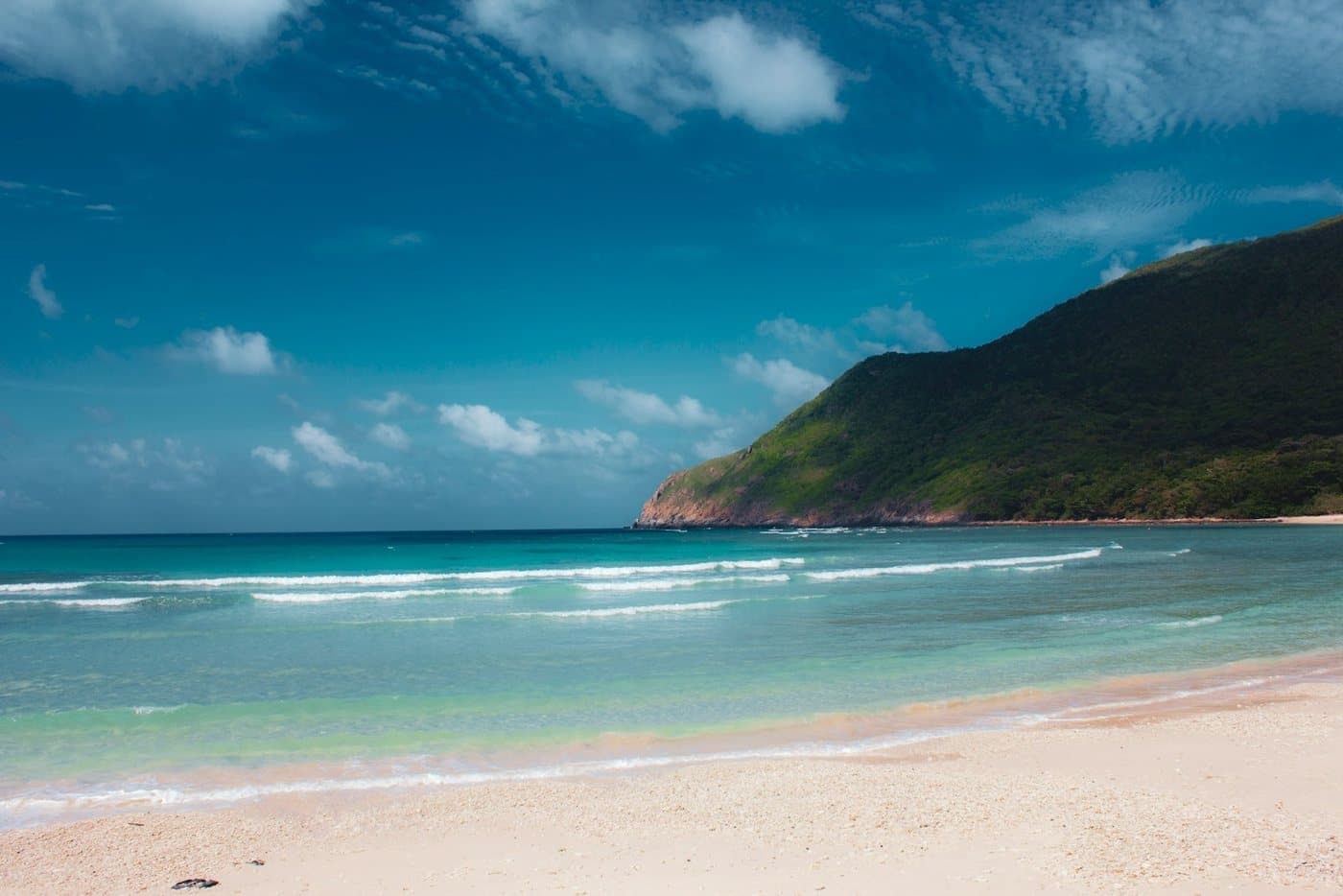
Vietnam or Bali in 2026: which is better?
In 2025 Bali welcomed around 7 million foreign visitors. Vietnam took almost 21.2 million the same year (Vietnam's General Statistics Office), and is now the region's fastest-rising base for remote workers. Same UTC+7 time zone, both a winter dream. But the visa rules differ, prices split by 2.5x, and December–February is peak season in one country and a wet, plastic-strewn slog in the other.

Figures current as of mid-2026. Exchange rates, visa rules and fares change — key numbers are flagged for regular updates. USD conversions use ~26,000 VND = $1.
The one-minute verdict
Don't want to read the whole thing? Take the scenarios. Eight typical situations and where they point.
| If you're... | Pick | Why |
|---|---|---|
| Counting your budget, want a dry winter | Vietnam (Phu Quoc, Mui Ne, Nha Trang) | 2.5x cheaper, visa-free for many, December–March is peak season in the south |
| After ocean swell and world-class surf | Bali (Uluwatu, Canggu) | Indian Ocean swell year-round, dozens of schools and breaks |
| Travelling with kids aged 3–7, want comfort | Vietnam (Phu Quoc) | Quiet island, shallow sea at Bãi Sao, Vinpearl Safari, half the Bali budget |
| A digital nomad who wants an English scene | Bali (Canggu, Ubud) | Top-3 nomad hub worldwide, 30+ coworkings in one area, nonstop networking |
| A nomad who prefers calm and no raids | Vietnam (Nha Trang, Da Nang) | No task-force patrols, easier visa, cheaper, quieter beach towns |
| Into yoga, retreats and spiritual practice | Bali (Ubud) | Dozens of world-class studios — Yoga Barn, Radiantly Alive |
| Chasing history, heritage and UNESCO sites | Vietnam | Hoi An, Hue, Ha Long, Phong Nha — four sites on one 10-day route |
| After a premium resort with full infrastructure | Bali (Uluwatu, Seminyak) | Aman, Six Senses, Bvlgari, Mandarin Oriental — world-class |
The formula in short: Vietnam for budget, easy entry and a dry winter. Bali for the vibe, the surf and an international community. Now the detail, factor by factor.
Head to head — 12 factors at a glance
Where a row shows "=", the two run neck and neck and the place matters more than the country.
| Factor | Vietnam | Bali | Verdict |
|---|---|---|---|
| Daily budget (traveller) | $25–45 | $60–110 | Vietnam |
| Visa (Western passports) | Visa-free/e-visa, cheap | VOA 30 days, ~$30 + ~$9 levy | Vietnam |
| Air gateways | Hanoi, HCMC, Da Nang, Cam Ranh | One — Denpasar | Vietnam |
| Onward travel inside country | 22 airports, 1,650 km of coast | One island + boats | Vietnam |
| Weather Dec–Mar | Dry season in the south | Wet season, dirty southern beaches | Vietnam |
| Beach quality | Good, 5–6 postcard spots | World-class surf beaches | = |
| Surf and kite | Kite in Mui Ne, surf in Da Nang | Uluwatu, Bingin — top of Asia | Bali |
| Yoga and wellness | Modest | Ubud — the world capital | Bali |
| Nomad infrastructure | Growing, few coworkings | 30+ coworkings in Canggu alone | Bali |
| Healthcare for foreigners | Vinmec (JCI) | BIMC Siloam, Bali International | = |
| International community | Weaker (outside HCMC) | Top-3 after Lisbon and Chiang Mai | Bali |
| English on signs and apps | Grab, Be, English in tourist zones | Widely spoken in expat areas | = |
Vietnam leads on 6 factors, Bali on 4, with 2 level. By the count, Vietnam. By logic, it depends. Two questions decide it: economics or community-and-surf, and which travel segment you're in. Budget matters, you want a dry winter and a painless visa? Vietnam. World-class surf, yoga, or networking with an international crowd? Bali.
Fast Track — no queue at the border
5–10 minutes instead of an hour in the immigration queue
from$11per passenger
Visas, entry and fees in 2026 — what changed

Entry is the clearest split. Vietnam waives the visa for 45 days for the UK, Norway, Switzerland, Japan, South Korea and 18 EU countries, others pay $25 for an e-visa — and there is no arrival fee. Bali always costs something: at least ~$30 for the VOA plus the island tourism levy. For a family of four, that's roughly $160 of difference on a single entry.
| Item | Vietnam | Bali |
|---|---|---|
| Visa-free entry | 45 days (UK, 18 EU states and others) | Almost none |
| Visa on arrival | Not needed if visa-free | VOA 30 days, ~$30 (500,000 IDR) |
| Extension | e-visa 90 days / ~$25 | +30 days, ~$56 or ~$150–170 via agent |
| Passport validity | 6+ months | 6+ months |
| Onward ticket | Rarely checked | Asked for more often |
| Island tourism levy | None | 150,000 IDR (~$9) per entry |
Vietnam — in and out in five minutes
Visas depend on your passport. Citizens of the UK, Norway, Switzerland, Japan, South Korea and 18 EU countries (including Germany, France, Italy, Spain, the Netherlands and Poland) get 45 days visa-free. Most others, including US, Australian and Canadian travellers, apply for the e-visa. Full rules — in our visa guide, repeat entries — in the visa run guide. You get the stamp right at the immigration desk in Cam Ranh, Da Nang, Ho Chi Minh City or Hanoi — no online form, nothing to print. Want to stay longer? The 90-day single-entry e-visa is $25 online at evisa.gov.vn, processing takes a few working days.
Bali — two visas plus a levy
VOA (Visa on Arrival) — 30 days, extendable once for another 30. It costs about 500,000 IDR (~$30) at the Denpasar airport counter, cash or card, expect a queue. The e-VOA via molina.imigrasi.go.id is the same price but bought online up to 48 hours before departure — you skip the line with a QR code.
Extending the VOA yourself is cheaper but means three visits to the immigration office over two weeks. Through an agent it's 2,000,000–2,500,000 IDR ($130–170), one visit for biometrics, the agent does the rest. Most nomads go through an agent to save the time.
B211A (visit visa) — up to 180 days, arranged in advance through an agent for $200–300. It suits anyone staying 3–6 months who doesn't want to run to extend every 30 days. Indonesia revises its visit-visa codes, so confirm the current name with your agent.
E33G Remote Worker KITAS — the legitimate digital-nomad visa. Twelve months, work allowed for a company outside Indonesia. Around $1,500–2,000 via an agent. You'll need a contract with an employer abroad, proof of income and insurance. Check the income threshold and tax rules at evisa.imigrasi.go.id.
The Bali tourism levy — 150,000 IDR
Since February 2024 every foreigner pays 150,000 IDR (~$9) once per entry to the island. Pre-pay it on LoveBali — officially at least 24 hours before departure — or use the kiosks after passport control, where the queue can be long. The money goes to infrastructure and conservation. For a family of four, that's about $36 added to every entry.
New in 2026 — the task force against remote work
What was once ignored no longer is. If you're coming to work remotely for 3+ months, the real routes are the E33G KITAS or a B211A. A tourist visa is no longer safe for remote work. No such raids are known in Vietnam as of September 2026. But the law gives no legal status to remote work for a foreign company on a visa-free stay — it is a grey zone.
Getting there — flights, time, cost
Both are long-haul from Europe and North America, and short hops from within Southeast Asia. The difference is the network. Vietnam has four international gateways with dozens of daily flights; Bali has one — Denpasar — and it's a busier chokepoint in peak season.
| Destination | Gateways | From Europe | From SE Asia | Notes |
|---|---|---|---|---|
| Bali (Denpasar) | 1 airport (DPS) | 16–20 h, 1 stop | 2–4 h | Peak-season seats sell out months ahead |
| Hanoi / HCMC | 2 hubs (HAN, SGN) | 12–16 h, direct or 1 stop | 1.5–3 h | Most daily options, easiest connections |
| Da Nang | DAD | 1–2 stops | 2–3 h | Central coast, growing route map |
| Cam Ranh (Nha Trang) | CXR | 1–2 stops | 2–3 h | Beach-town gateway, seasonal charters |
| Phu Quoc | PQC | 1–2 stops | Connect via HCMC | Island hub, best via Ho Chi Minh City |
The logistics story is simple: Bali funnels everyone through one airport, so peak-season seats go early and delays cascade. Vietnam spreads the load across several hubs with flights most days, so you can pick almost any date. From within the region, both are an easy short hop — Vietnam just has more airports and more choice.
Winter weather — where it's dry, where it's wet
The single biggest argument for Vietnam in winter is dry weather. From December to February Bali lives in its rainy season, and for anyone staying a while that's no small thing. It can pour for half a day, humidity sits at 80–85%, and the southern beaches collect rubbish and plastic dragged in by the current.
| Month | Phu Quoc | Nha Trang | Da Nang | Canggu/Kuta | Ubud | Uluwatu |
|---|---|---|---|---|---|---|
| December | Peak, 28–30°C, dry | Swell, 25–28°C | Rain, 22–26°C | Wet season, 28–32°C | Rain, 25–29°C | Less rain, 28–32°C |
| January | Peak, 26–30°C, dry | Dry, 24–27°C | Cool, 22–25°C | Wettest, 27–31°C | Wettest, 24–28°C | Surf season, 27–31°C |
| February | Peak, 27–31°C | Season starts, 25–28°C | Dry, 24–28°C | Rain easing, 28–32°C | Rain easing, 25–29°C | 28–32°C |
| March | Peak, 28–32°C | Good, 27–30°C | Warm, 26–30°C | Rain ends, 29–33°C | 27–31°C | 29–33°C |
What's wrong with Bali's beaches December–February
The south of the island — Canggu, Seminyak, Kuta, Legian — fills with rubbish in the rainy season: plastic, seaweed, sometimes worse, dragged in by Indian Ocean currents from Java and Sumatra. Local clean-up drives can't keep pace. On Reddit r/bali and TripAdvisor forums you'll find dozens of January posts with photos of dirty beaches. By March–April it's cleaned up; by May it's fine.
Uluwatu, Nusa Lembongan and the Gilis suffer less: the islands sit on the eastern side, out of the current, and Uluwatu's beaches are tucked under the cliffs. If you're on Bali in the winter months, pick the Uluwatu cliffs or the smaller islands, not Canggu, Kuta or Seminyak.
Bali rain is short but dramatic: 30–90 minutes once a day, usually toward evening. Between downpours it's sunny, 28–32°C. But 80–85% humidity all the time wears down anyone who dislikes a sauna.
The dry winter in Vietnam — exactly where
In southern Vietnam, December–March are the best months of the year. Phu Quoc: dry round the clock, 27–31°C, warm water — the Vietnamese equivalent of Bali without the rainy season, and a third of the price. Ho Chi Minh City: hot, dry, clear, ideal for a business stay without a beach. Mui Ne and Phan Thiet: sun, and steady kitesurf wind from November through April.
The centre is trickier. Da Nang and Hoi An are still rainy in December–January, clearing to February–March. Nha Trang has swell and the odd shower in December, then dries out from January.
If you're coming for a long stay and need dry weather from day one, aim for Phu Quoc or Ho Chi Minh City. Arriving in February? Nha Trang and Da Nang work too. On Bali, any December–February date means rain.
Prices — the basket and the monthly budget

Conversions use ~26,000 VND = $1 and ~16,000 IDR = $1 as of mid-2026.
On a country average Bali costs less of a premium than on the coast. On the beach-tourist hubs the gap is wider — up to 3x. Canggu rents have climbed 15% over the past two years; Nha Trang and Da Nang are rising 5–7%.
| Category | Nha Trang | Da Nang | Canggu | Ubud | Uluwatu |
|---|---|---|---|---|---|
| Latte in a café | ~$1–2 | ~$1.20–2.20 | ~$2.20–3.90 | ~$2.20–3.30 | ~$2.40–4.20 |
| Lunch at a local spot | ~$2–4 | ~$2.20–4.40 | ~$5–7.70 | ~$3.90–6.60 | ~$5.50–8.80 |
| Dinner with a beer, for two | ~$15–25 | ~$16–31 | ~$31–50 | ~$24–39 | ~$33–53 |
| Scooter rental / month | ~$50–80 | ~$55–88 | ~$45–60 | ~$45–60 | ~$50–66 |
| Petrol / month | ~$17–28 | ~$20–31 | ~$12 | ~$12 | ~$14 |
| SIM with data / 30 days | ~$5–8 | ~$5–8 | ~$8–13 | ~$8–13 | ~$8–13 |
| Coworking / month | ~$55–90 | ~$66–110 | ~$200–300 | ~$130–200 | ~$165–245 |
| Tourism levy | None | None | +~$9 once | +~$9 | +~$9 |
Monthly budget for one person (beach base with remote work)
| Line item | Nha Trang | Da Nang | Canggu | Ubud | Uluwatu |
|---|---|---|---|---|---|
| Housing (studio / 1BR villa) | ~$155–220 | ~$200–300 | ~$720–1,110 | ~$500–890 | ~$610–1,000 |
| Food (local + cafés) | ~$245 | ~$275 | ~$440–610 | ~$330–500 | ~$390–550 |
| Transport | ~$66 | ~$78 | ~$61 | ~$61 | ~$61 |
| Coworking | ~$72 | ~$88 | ~$245 | ~$165 | ~$200 |
| Fun + connectivity | ~$110 | ~$120 | ~$220 | ~$165 | ~$190 |
| Total, comfortable | ~$650–720 | ~$770–870 | ~$1,700–2,250 | ~$1,230–1,760 | ~$1,450–2,000 |
A month in Canggu equals three in Nha Trang. A month in Ubud equals two in Da Nang. When the stay is long and the budget is finite, the numbers favour Vietnam. If your budget starts at $2,000/month and the surf vibe is the point, Bali earns the difference. If saving matters, the choice is obvious.
A family of four does the maths differently. A month in Nha Trang for a couple with two kids is $1,000–1,300 (a 2BR flat, food, school, activities). The same setup in Canggu is $3,100–3,900. Over a four-month winter the gap is around $8,500 — enough for another family trip and an island tour on top.
Where to stay — neighbourhoods for a longer visit

Bali — five bases
- Canggu / Pererenan / Berawa — the main nomad hub of Southeast Asia. A 1BR villa with a pool is 12–18M IDR/month ($800–1,200). Surf beaches, a café on every corner, the best internet on the island. Downsides: rush-hour gridlock, noise, rubbish on the beaches in the wet season, prices rising 10–15% a year.
- Ubud — the island's centre, jungle, rice terraces, yoga. 1BR from 8–14M IDR ($530–930). About 30% cheaper than Canggu, quieter, cooler. Downside: no sea, an hour to the beach by scooter, more rain.
- Uluwatu / Bingin — southwest clifftops, world-class surf, a premium feel. 1BR 10–16M IDR ($670–1,070). Downside: fewer coworkings, everything is spread out, you need a scooter.
- Sanur — the family base on the east coast. Gentle sea, lower prices, fewer tourists. Good for couples with kids and anyone wanting calm.
- Seminyak — clubs, restaurants, boutiques. Pricey, loud, not the best pick for a 3+ month stay.
Vietnam — five bases
- Nha Trang — a long, walkable beach city with an established expat scene. A long-stay studio is ~$155–220/month, a 1BR ~$275–390. Sea, restaurants, schools, healthcare, an airport nearby. Downsides: swell in December–January, and the city beach isn't the best.
- Da Nang — a modern city with a Korean plus growing international community and the ocean within walking distance. Studio ~$200–300, 1BR ~$330–500. Downside: rain October–January, better to arrive by February.
- Phu Quoc — a quiet tropical island, calm beaches, dry season November–April. Studio ~$275–390. This is the Vietnamese "Bali without the rain," at a third of the price. Downside: from many countries you still connect through Ho Chi Minh City or Hanoi.
- Mui Ne / Phan Thiet — the cheapest option. Studio ~$130–200. Southeast Asia's kitesurf capital, with wind November through April. Downside: a small town with modest infrastructure.
- Ho Chi Minh City — a big business hub with little beach. Good for nomads who don't need the sea, with strong coworkings and cafés.
Bali-to-Vietnam — which base matches which
| If you liked on Bali... | Vietnam equivalent | The difference |
|---|---|---|
| Canggu (nomad hub) | Da Nang + a bit of HCMC | Da Nang is 2.5x cheaper with the ocean right there, but fewer coworkings and less community |
| Ubud (jungle, calm) | Da Lat | Da Lat is a cool central-highlands town, cheaper, but without the yoga scene |
| Uluwatu (surf + cliffs) | Da Nang, My Khe (surf) | Uluwatu delivers advanced surf; Da Nang is for beginners and intermediates |
| Sanur (family beach) | Nha Trang or Phu Quoc | Phu Quoc is closer in feel; Nha Trang has the bigger expat community |
| Seminyak (nightlife) | Nha Trang (the bar strip) | Comparable nightlife, and Nha Trang is 2–3x cheaper |
Read also: Nha Trang · Da Nang · Phu Quoc · Mui Ne · Da Lat


Infrastructure and logistics
| Item | Bali | Vietnam |
|---|---|---|
| Internet (median download) | 60–85 Mbps in Canggu, 50–70 in Ubud | 50–80 Mbps in Da Nang/Nha Trang, 80–100 in HCMC |
| Mobile 4G/5G | Good, but the SIM costs more | Good, and the SIM is ~1.5x cheaper |
| Coworkings (in one area) | Canggu 30+, Ubud 15+, Uluwatu 5–7 | Da Nang 6–8, Nha Trang 3–5, HCMC 30+ |
| Food delivery | Grab, Gojek — both, mid prices | Grab, Be, GoFood — competition, lower prices |
| Traffic | Brutal in Canggu/Seminyak at rush hour | HCMC yes; Nha Trang/Da Nang no |
| Roads | Narrow, potholed in the rain | New promenades, paved main routes |
| Domestic flights | One airport + boats to islands | 22 airports, Hanoi–HCMC in 90 minutes |
On internet the two are level — Canggu gives 75 Mbps in a coworking, Da Nang and Nha Trang 60–80 Mbps. On the number of coworkings packed into one spot, Bali wins outright: in Canggu you can live and work on foot, while Vietnamese resorts mean a scooter ride across town.
On roads and traffic Vietnam is easier. Nha Trang and Da Nang are calm beach cities where the scooter doesn't suffer at rush hour. Canggu is a 3 km jam every day from 17:00 to 19:00 — and a river when it rains.
Safety — what's actually risky
Both countries are safe for travellers by world standards, and serious crime against foreigners is rare. But the small stuff differs, and it's worth knowing for a longer stay.
More common on Bali
- Money-changer scams — the top tourist complaint. Sleight of hand shortchanges you. Change only at banks or authorised KUPVA outlets with a Bank Indonesia sign, never at street kiosks flashing "no commission."
- Scooter crashes — the leading cause of foreigner deaths and injuries. In the rainy season accidents rise 50% on wet tarmac.
- Dengue — high risk in January–March, especially where water sits.
- Rubbish on southern beaches — not crime, but real: December–February drags plastic in, and southern Bali gets dirty.
- Strong currents on the southern beaches — dangerous for weak swimmers; always watch the flags.
- The task force targeting laptop workers — not a crime as such, but a real risk of deportation and an entry ban.
More common in Vietnam
- Pickpocketing in Ho Chi Minh City, especially phones and bags snatched from scooters.
- Non-Grab taxi scams — the meter "accidentally" runs 10x. The fix: only Grab/Be.
- Counterfeit dong notes at street exchanges. Change at banks or official desks.
- Scooter crashes — as on Bali, the main risk.
Natural hazards
- Bali — Mount Agung (last erupted 2017–2019), Indonesia sits in a tsunami zone, strong currents.
- Vietnam — typhoons on the centre (Da Nang, Hue) from September to November. Nha Trang is exposed too: Typhoon Damrey made landfall in Khanh Hoa in November 2017. The south (Phu Quoc, HCMC, Mui Ne) has almost none.
Healthcare — clinics and real costs
| Item | Bali | Vietnam |
|---|---|---|
| Top clinics | BIMC Siloam (Kuta, Nusa Dua, Ubud), Bali International, Siloam Denpasar | Vinmec Hanoi/HCMC/Da Nang, Family Medical Center |
| Accreditation | ACHSI (BIMC Nusa Dua), JCI (Siloam) | JCI (Vinmec) |
| Doctor visit (private) | $50–100 | $30–60 |
| Ambulance | Weak, a Grab is faster | Weak, a Grab is faster |
| English | In almost all private clinics | At Vinmec and Family Medical |
| Dentistry (clean) | $80–150 | $40–80 |
BIMC Nusa Dua is Bali's flagship. Bali International Hospital is a newer hospital in Sanur, aiming to be a local answer to Bumrungrad. Both take international insurance, with English everywhere.
Vinmec holds JCI accreditation at its Times City flagship in Hanoi and Central Park in Ho Chi Minh City; among independent hospitals, FV Hospital has it too. Vinmec handles complex work — oncology, cardiology, transplants — and running 30–40% cheaper than the Bali equivalents. Nha Trang has a Vinmec at 42A Trần Phú on the seafront; Da Nang has a large modern complex; Hanoi and HCMC hold the flagship hospitals.
Ambulance service is weak in both by European standards. For minor injuries people usually take a Grab/Gojek to a private clinic. For serious trauma, loss of consciousness or a suspected spinal injury, call an ambulance — 115 in Vietnam. In the bigger Bali towns the ambulance arrives faster than in the Vietnamese ones.
Entertainment, surf, culture

What Bali offers
- World-class surf. Uluwatu, Bingin, Padang-Padang, Impossibles, Dreamland — a dozen breaks for experienced surfers. Canggu, Berawa, Echo Beach for beginners and intermediates. Lessons $25–40, board rental $5–8/day. Swell year-round, best April–October.
- The world capital of yoga — Ubud. Yoga Barn, Radiantly Alive — studios with international teachers. Drop-in $10–18, unlimited month $200–300. Retreats from $1,500 a week.
- Nature — the Tegallalang and Jatiluwih rice terraces, Tibumana and Tegenungan waterfalls, sunrise on Mount Batur, the Monkey Forest.
- Temples — Tanah Lot at sunset, Uluwatu with the Kecak dance, Besakih on Agung's slope.
- Islands nearby — Nusa Penida (Kelingking), Nusa Lembongan, the Gilis, an hour away by boat.
- Nightlife — Seminyak, Canggu (Old Mans, La Brisa, La Favela). World-brand level.

What Vietnam offers
- Four UNESCO sites — Hoi An (the lantern-lit old town), Hue (the imperial citadel), Ha Long (a bay of some 1,600 islands), Phong Nha-Ke Bang (the world's largest caves).
- Long city beaches — Da Nang's 30 km of coast; Nha Trang's 7 km in the city centre. The full map is in the Vietnam beaches guide.
- Theme parks — VinWonders in Nha Trang and on Phu Quoc, Ba Na Hills in Da Nang with the Golden Bridge.
- Kite and surf — Mui Ne is Southeast Asia's kitesurf capital (November–April); Da Nang has the best surf in Vietnam (September–March). A dozen schools, at half the Bali price.
- Nature — the Sapa rice terraces in the north, the Phong Nha caves, the Mekong Delta, the Cu Chi tunnels.
- Coffee — Vietnam is a top-three world producer. Robusta, egg coffee, coconut coffee, Da Lat beans.

Head to head, by interest
Surf — Bali, no contest. Yoga — Bali, no contest. Culture and history — Vietnam. Nature parks — level (Mount Batur vs the Phong Nha caves). Nightlife — Bali (Canggu/Seminyak) beats anything in Vietnam; only Nha Trang comes close, and it's a step down. Coffee — Vietnam, no contest. Family theme parks — Vietnam (Vinpearl, Ba Na Hills).

The community — international and local
Bali — a top-3 nomad hub worldwide
Canggu is the Lisbon of Southeast Asia. Every day the coworkings hold hundreds of nomads from 80 countries — networking events, founder meetups, kids' schools, cafés labelled with their Wi-Fi speed. English-speaking communities are large and layered, and finding an accountant, a lawyer or a realtor who speaks your language is trivial.
The downside is the April 2026 task force. The mood has turned tense; many are moving from Canggu to Ubud or Uluwatu, where patrols are lighter. Some head to Vietnam or Chiang Mai instead. The 2026 trend is an outflow of nomads from Bali toward Malaysia (Kuala Lumpur) and Vietnam (Da Nang).
Vietnam — a rising, calmer scene
Nha Trang and Da Nang have the biggest and fastest-growing expat scenes in the country. Local realtors and doctors in the tourist zones often speak some English, there are international schools, and the community skews long-stay families and independent workers rather than the party crowd. Da Nang is climbing fastest: a Korean, plus growing European and international, community with the ocean a short walk away.
The international nomad community in Vietnam is weaker than Bali's — far fewer digital nomads, fewer networking events, smaller coworkings. The upside is that it's calmer, there are no raids, the visa is simpler and prices are lower.
If English-speaking networking with an international crowd matters most, Bali. If calm and no raids matter more, Vietnam.
When to pick Bali (honestly)
Five scenarios where Bali is the better call.
- World-class surf. Uluwatu, Bingin, Padang-Padang are breaks that work year after year — Indian Ocean swell, schools, rentals. In Vietnam surf only shows up in Da Nang from September to March, and the waves are gentler.
- Yoga and wellness. Ubud is the world capital — dozens of studios with international teachers, retreats, ashrams. In Vietnam it's niche, with only a handful of organised schools.
- International networking for a nomad. Canggu offers a circle no Vietnamese city reproduces. If meeting founders from around the world and growing projects matters, Bali.
- Premium resorts. Aman, Six Senses, Bvlgari, Mandarin Oriental — Bali has dozens of world-class hotels. Vietnam's premium segment is catching up, but the choice is still narrow.
- Instagram scenery. Kelingking on Nusa Penida, the Tegallalang terraces, the Lempuyang gates — content Southeast Asia doesn't repeat anywhere else.
None of these is you? Vietnam will most likely give you more for the same money, without the visa headaches.
When to pick Vietnam
The parallel list. Five scenarios where Vietnam is objectively better.
- Budget above all. Across an 8-category basket, Vietnam undercuts Bali by 40–70% on six lines; only scooter rental and fuel are cheaper on Bali. A comfortable month in Nha Trang is ~$650 against ~$1,800 in Canggu. Over a four-month winter the gap buys another trip or half a year of runway.
- A dry winter with a beach. Phu Quoc, HCMC and Mui Ne are peak season December–March, with zero rain. Bali is in its wet season then, and the south of the island is dirty.
- A painless visa. Visa-free for many, no levy, a 30-second stamp at the airport. On Bali it's a visa, plus the island levy, plus an extension, plus the task-force risk if you work remotely.
- A long stay with no raids. An e-visa gives you up to 90 days in a row without leaving the country. On Bali the same span needs a B211A or E33G KITAS, and the deportation risk for working without the right visa is real.
- Route variety inside the country. Vietnam stretches 1,650 km — in two weeks you can see Hanoi, Ha Long, Hue, Hoi An, Da Nang, Nha Trang, Phu Quoc. Bali is compact — you've circled it in a week.
FAQ
Vietnam is roughly 2.5–3x cheaper across most categories in our basket. On a country average the gap is smaller, but on tourist beach hubs it stretches to 3x
- A comfortable month in Nha Trangaround $650–720lands
- Da Nang$770–870
- Canggu$1,700–2,250while is
- Ubud$1,230–1,760
The cheapest base in either country is Mui Ne in Vietnam (from ~$500/month) or Ubud on Bali (from ~$1,230/month). See the detail in the Nha Trang guide
For a beach family stay on a budget, Vietnam — Phu Quoc or Nha Trang. Calm shallow water, Vinpearl Safari and water parks, international schools in Nha Trang, Vinmec hospitals. Reckon on $1,000–1,300/month for a family of four. On Bali, Sanur is the family pick (gentle sea, quieter), but a comparable setup is $3,100–3,900/month. If budget is no object and an international scene matters, Bali Sanur or Uluwatu; if price and calm matter more, Vietnam Nha Trang or Phu Quoc.
Almost everyone does — most Western passports (US, UK, EU, Australia) get no free entry to Indonesia. The simplest route is Visa on Arrival (VOA): 30 days for 500,000 IDR (~$30), issued at Denpasar airport, extendable once for another 30 days. You can also buy the e-VOA online in advance via molina.imigrasi.go.id. On top of that, since February 2024 every foreigner pays a 150,000 IDR (~$9) Bali tourism levy on each entry, via LoveBali or kiosks after immigration. Vietnam gives 45 days visa-free to citizens of the UK, Norway, Switzerland, Japan, South Korea and 18 EU countries; most others, including US, Australian and Canadian travellers, use the $25 e-visa. There is no arrival levy.
Officially no — a tourist visa does not allow work, even for a foreign employer. Since April 2026 Bali has run a dedicated immigration task force patrolling Canggu, Ubud, Seminyak and Uluwatu; in the first three weeks 62 foreigners were detained for various violations, including working on tourist visas, facing deportation and entry bans. The legitimate path is the E33G Remote Worker KITAS (12 months, ~$1,500–2,000 via an agent) or a 6-month visit visa ($200–300); check the income requirement at evisa.imigrasi.go.id. No such raids are known in Vietnam as of September 2026, but the law gives no legal status to remote work on a visa-free stay — it is a grey zone.
- Canggu: a 1BR villa with a pool12–18M IDR$800–1,200
- Food$400–500
- Coworking$200–300
- Transport and fun$300
- A month$1,700–2,250
- Nha Trang: a long-stay studio$155–220
- Food$245
- Coworking$70
- Transport and fun$180
- A monthabout $650–720
That is a 2.8–3x gap in Nha Trang’s favour. Over a four-month winter it adds up to $4,200–6,100 saved
It depends what you want beaches for. For surf, Bali wins outright — Uluwatu, Bingin and Canggu are world-class. For swimming and calm water, Vietnam: Bãi Sao on Phu Quoc (white sand, turquoise), Mỹ Khê in Da Nang, Hòn Mun off Nha Trang. From December to February the south of Bali (Canggu, Seminyak, Kuta) fills with plastic and rubbish washed in by Indian Ocean currents. Coming in winter for the beach? Phu Quoc or Uluwatu's cleaner cliff beaches — not Canggu. See the Vietnam beaches guide for the pick of the coast.
From Western Europe, Bali (Denpasar) is a long haul with at least one stop, typically 16–20 hours via the Gulf or Singapore. Vietnam is similar or slightly shorter, and has far more gateways — Hanoi, Ho Chi Minh City, Da Nang and Cam Ranh all take direct or one-stop flights from Europe, the Gulf and East Asia. From within Southeast Asia both are a 2–4 hour hop; Vietnam simply has more airports and more daily options.
Violent crime is comparably low — both are safe for travellers. The small stuff differs. On Bali the main risks are money-changer scams (the top tourist complaint), scooter crashes in the rainy season, dengue in January–March and rubbish on southern beaches. In Vietnam it is pickpocketing in Ho Chi Minh City, non-Grab taxi meter scams and counterfeit notes at street exchanges. Natural hazards: Bali has Mount Agung and a tsunami zone; Vietnam has typhoons on the central coast in September–November (they reach Nha Trang too; further south they are rare). Both are safe for families with basic precautions.
Bali is best April–October (dry season); December–February is the wet winter, with January the wettest. Vietnam depends on the region:
- The south (Phu Quoc, HCMC, Mui Ne)November–Aprilpeaks
- The centre (Da Nang, Hue, Hoi An)March–Augustis best
- Nha TrangFebruary–September
- The north (Hanoi, Sapa)October–Novemberis best and March–April
Travelling in winter and want dry weather? Choose southern Vietnam over Bali. Travelling in summer or autumn for surf? Choose Bali
- Guide
Con Dao Beaches: Which One to Visit and When (2026)
A practical guide to Con Dao beaches: which swim year-round, which appear only at low tide, park permits, snorkeling and turtle season. 2026 prices.Con Dao Beaches: Which One to Visit and When (2026) - Guide
Flights to Ho Chi Minh City: Tan Son Nhat & Hubs
How to reach Ho Chi Minh City by air: Tan Son Nhat (SGN), international hubs and direct routes, domestic flights and the airport transfer.Flights to Ho Chi Minh City: Tan Son Nhat & Hubs - Guide
Hanoi vs Ho Chi Minh City: Which to Visit in 2026
Hanoi or Ho Chi Minh City? North vs south compared — weather, prices, food, atmosphere, things to do and who each city suits.Hanoi vs Ho Chi Minh City: Which to Visit in 2026